

Paint primer does not get much attention, but it plays a big role in how well a paint job performs. Most people focus on color and finish, yet the layer underneath often determines how long that paint lasts.
A good paint primer helps paint stick better, creates an even surface, and improves durability. Without it, paint may struggle to bond with surfaces like wood, drywall, brick, or metal.
Primer may seem like an extra step, but it often makes the difference between paint that lasts and paint that starts peeling far too soon.
Key Takeaways:
What Paint Primer Actually Does
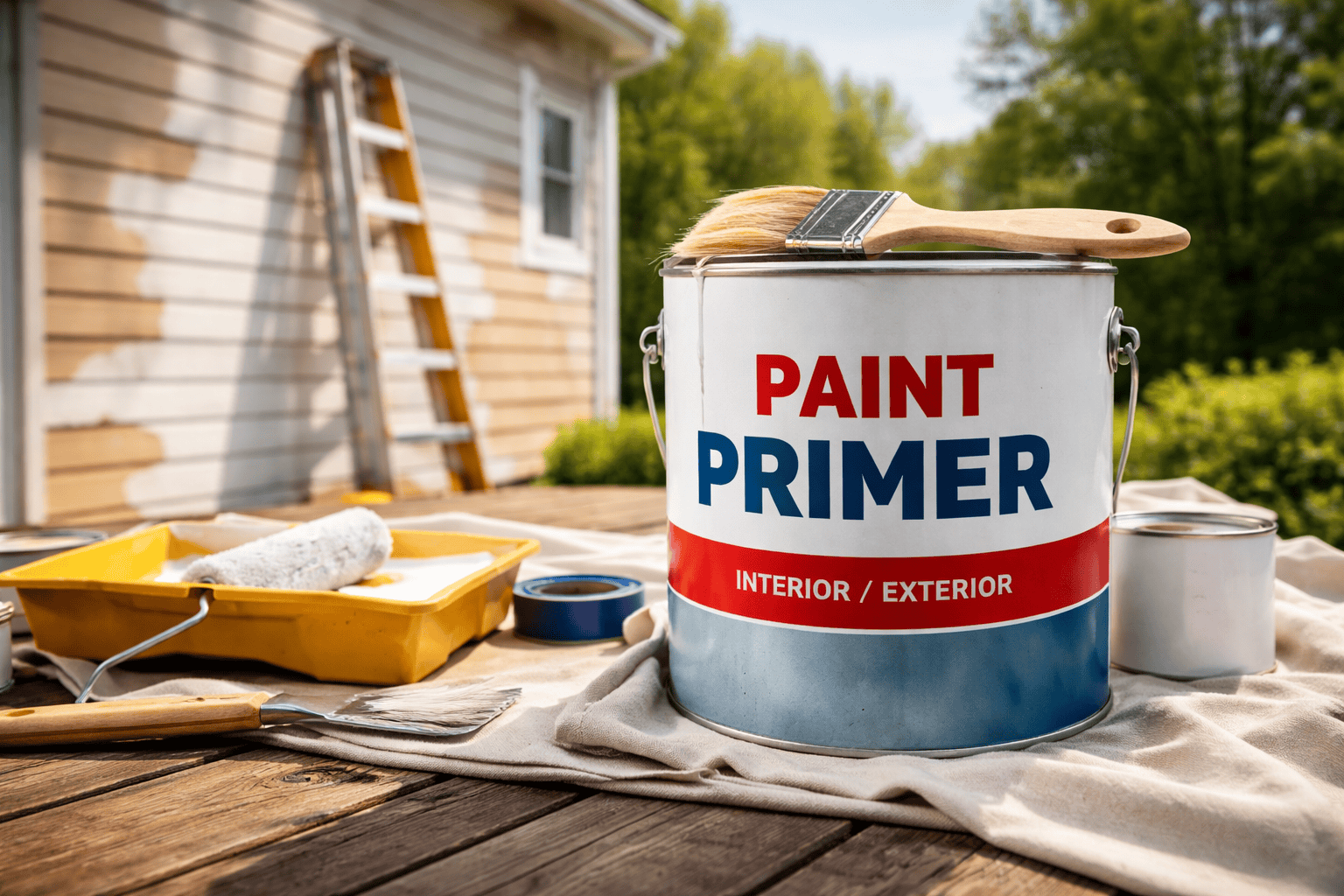
Think of paint primer as the bridge between the surface and the paint.
Surfaces like drywall, wood, or concrete absorb paint differently. Primer prepares that surface so the paint can spread evenly and bond properly.
Primer also fills small pores and imperfections. This creates a smoother base, which helps the finish coat look cleaner and more consistent.
Without primer, paint can soak into surfaces unevenly. That often leads to patchy color or weak adhesion.
Why Paint Primer Helps Paint Stick
One of the biggest benefits of paint primer is adhesion. Paint needs a surface it can grip.
Some materials, especially glossy or porous ones, make it difficult for paint to bond directly.
Primer solves that problem by creating a layer that paint sticks to more easily.
Common surfaces that benefit from primer include:
- Bare drywall
- Raw wood
- Masonry surfaces like brick or stucco
- Metal with light rust
- Previously stained surfaces
This step helps the finish coat stay intact longer.
Paint Primer Helps With Color Coverage
Primer also helps paint color appear more consistent.
If you paint directly over dark colors or uneven surfaces, the final color may require several coats to cover it completely.
Primer creates a neutral base so the color coat can perform the way it should.
Benefits include:
- More consistent color
- Fewer finish coats
- Better overall coverage
That is why primer is often recommended when switching from a dark wall color to a lighter one.
Types Of Paint Primer
Not every paint primer works the same way. Different surfaces require different formulas.
Here are some of the most common types used in residential painting.
Drywall Primer
Drywall primer is often used on new drywall. Fresh drywall absorbs paint quickly, which can lead to uneven coverage.
A primer designed for drywall seals the surface so paint spreads evenly. It also improves how the finish coat bonds to the wall.
Wood Primer
Wood surfaces often contain natural oils and variations in texture. Primer helps paint adhere properly while sealing the wood grain.
It also helps prevent stains from bleeding through the finish coat.
Wood primer is commonly used on:
- Trim
- Cabinets
- Doors
- Wood siding
Masonry Primer
Surfaces like concrete, brick, and stucco can absorb moisture and paint differently than wood or drywall.
A masonry primer helps seal those porous surfaces so paint can bond properly. This is especially helpful for exterior painting where moisture and weather can affect durability.
Metal Primer
Metal surfaces sometimes develop rust or oxidation. Metal primers are formulated to bond with metal while helping slow corrosion. They are often used on exterior railings, metal doors, and other exposed surfaces.
When Paint Primer Is Most Important
There are several situations where using paint primer becomes especially helpful.
These include:
- Painting over stains or smoke damage
- Switching from dark paint colors to light ones
- Painting new drywall or repaired surfaces
- Covering surfaces with uneven textures
- Painting materials like brick or concrete
Primer creates a consistent base so the final paint performs better.
Paint Primer And Long-Term Durability
Primer is not just about appearance. It also helps paint last longer.
When paint bonds properly, it becomes more resistant to peeling, cracking, and moisture damage.
That durability matters even more on exterior surfaces like siding, trim, and masonry.
For example, surfaces exposed to rain, humidity, and sunlight benefit greatly from a well-prepared primer layer before any paint is applied.
Paint Primer Is A Small Step With A Big Impact
Paint color usually gets the spotlight, but primer quietly does the heavy lifting underneath. A quality paint primer improves adhesion, helps paint cover evenly, and supports durability over time.
Skipping primer may save time in the moment, but it often leads to more maintenance later. Taking the time to prepare surfaces with the right primer helps paint systems perform the way they were designed to.
Why Paint Primer Matters In Professional Painting Projects
At Despres Painting, primer is never treated as an afterthought. Our team understands how important that first layer is for long-term performance.
Every project starts with careful preparation and product selection. We evaluate the surface, choose the correct primer, and apply coatings that support durability and appearance.
Our process includes:
- Inspecting surfaces such as drywall, wood, masonry, and metal
- Cleaning and preparing areas before coating
- Applying the correct paint primer for the surface type
- Using quality coatings designed for long-lasting protection
- Applying multiple coats when needed for better coverage
These steps help paint systems perform the way homeowners expect.
If you are planning a painting project, the right preparation and primer can make a noticeable difference in how the results hold up over time.
Despres Painting proudly serves Columbia, SC and the surrounding areas with careful preparation and durable coating systems.
Call 803-991-4774 today for a FREE estimate and learn how the right primer and paint system can protect your home for years to come.