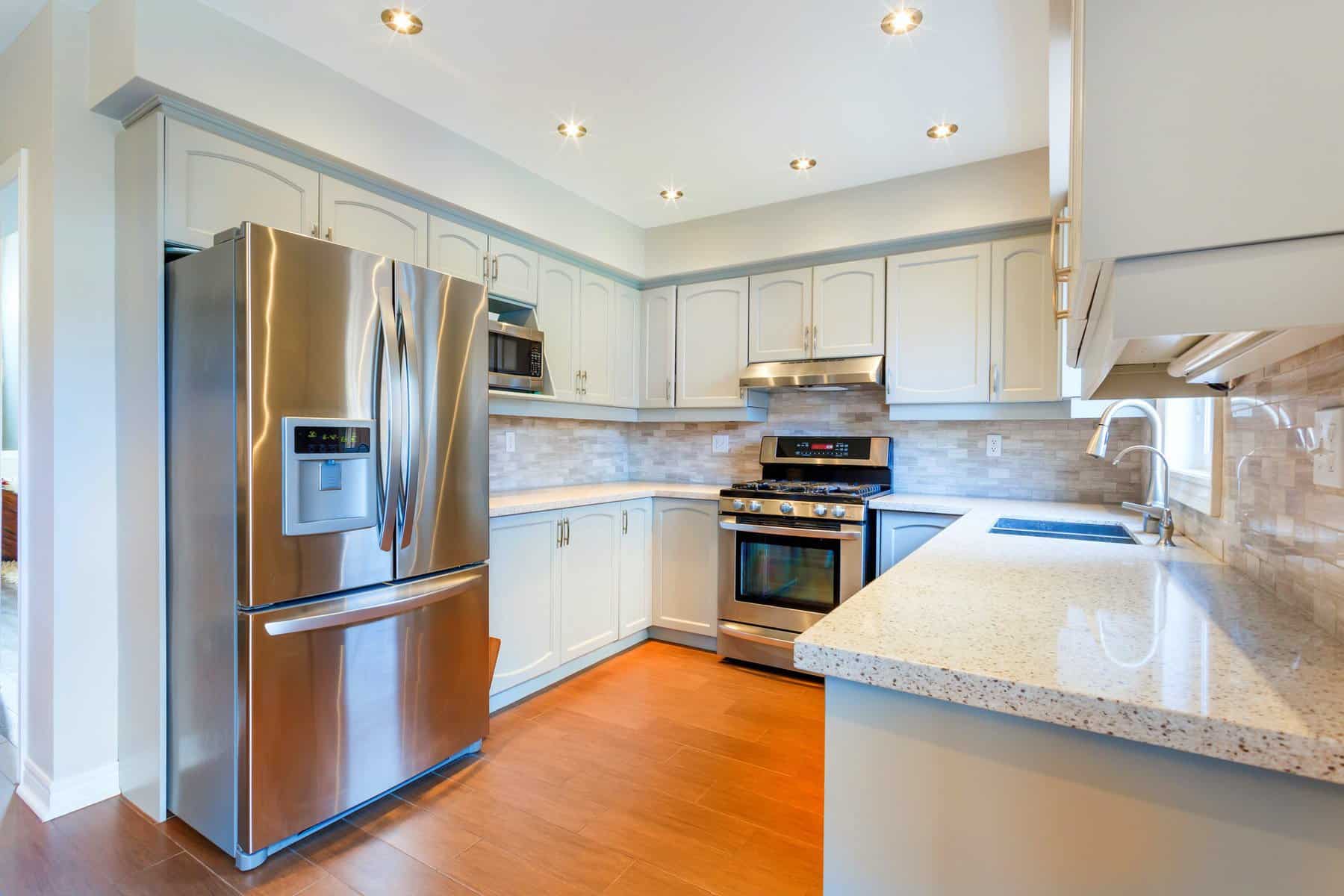

One of the most common questions I hear from homeowners across the Columbia area is also one that directly affects the quality of what ends up in their kitchen: which cabinet painting methods comparison actually matters when hiring a pro? Whether you are in Columbia, SC, Lexington, SC, or Irmo, SC, the spray vs brush roll cabinet painting debate comes up constantly, and the difference in outcome is real. I cover all of this through our cabinet painting services at Despres Painting (that is pronounced Da-Pray, for the record), and I want to give you a straight answer rather than a sales pitch.
What Each Method Involves
Before comparing outcomes, it helps to understand what each approach actually looks like on the job.
Spray painting uses a professional-grade HVLP (high-volume, low-pressure) or airless sprayer to atomize paint into fine particles that settle evenly across the cabinet surface. Teams typically remove doors and drawer fronts, lay them flat, and spray them in a protected area. Teams mask cabinet boxes thoroughly or spray them in place, depending on the crew’s setup. When an experienced team does it, the result is a finish that looks smooth and uniform under any lighting condition.
Brush and roll involves applying paint with a foam roller on flat surfaces, then following with a quality brush, a technique commonly called “tipping.” According to Fine Homebuilding, rolling larger surfaces first and tipping with a quality brush produces nearly invisible brush strokes on cabinet surfaces without spray equipment. This method requires less masking and no spray setup, but the application itself moves more slowly.
Hybrid application is also common among professional crews: box frames are brush-and-rolled on site while doors and drawer fronts are removed and sprayed separately. This approach balances efficiency with finish quality and suits full kitchen projects where cabinet boxes cannot easily be moved offsite.
Spray vs Brush Roll Cabinet Painting: Side-by-Side Comparison
Here is a direct look at how the two approaches stack up across the factors that matter most.
| Factor | Spray Painting | Brush and Roll |
|---|---|---|
| Finish smoothness | Factory-smooth, no texture | Slight stipple possible on flat panels |
| Visible brush strokes | None | Minimal if tipped correctly |
| Prep and masking time | More extensive | Less prep required |
| Application speed | Faster once setup is done | Slower, more manual effort |
| Open-grain woods (oak) | May not fill pores as effectively | Pushes paint into grain better |
| Closed-grain woods (maple, cherry) | Excellent choice | Can introduce slight texture |
| Best project size | Full kitchens, large cabinet sets | Smaller projects, vanities, laundry rooms |
| Premium spray-only coatings | Available | Not compatible |
Finish Quality: How the Two Methods Actually Compare
This is the factor most homeowners care about, and the honest answer is that spraying produces a smoother result in most situations. When paint is atomized and applied in thin, even layers, the surface cures flat. There are no ridges, no stroke lines, and no texture that catches the light at an angle. Run your hand across a properly sprayed cabinet door, and the surface feels consistent from edge to edge.
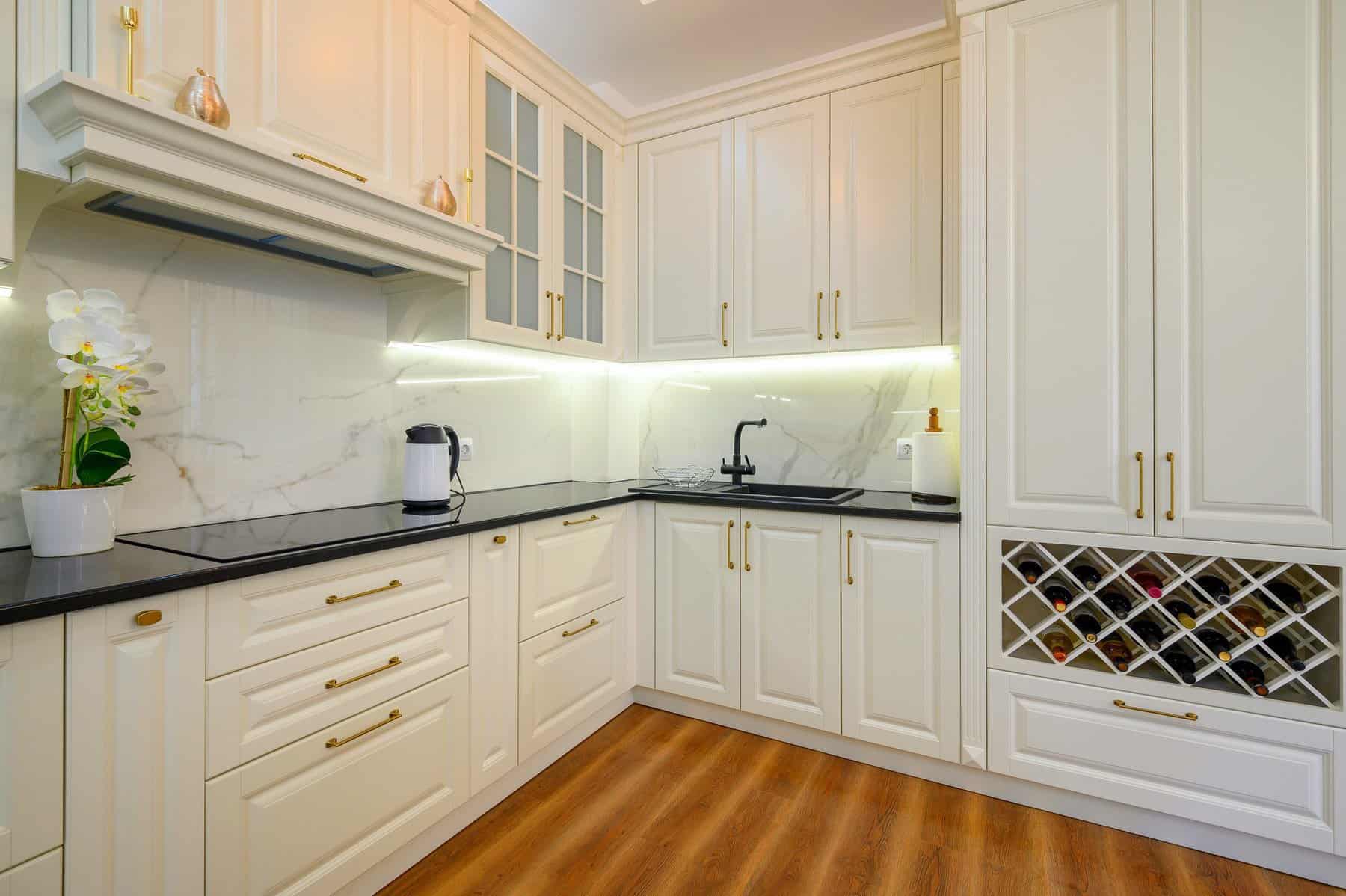
Brush and roll, done well, can come close. A foam roller applies paint evenly on flat surfaces, and tipping with a quality brush reduces any visible texture. The finish reads as clean and even at normal viewing distance. The gap between the two methods is most visible under raking light and on high-sheen finishes. Semi-gloss and gloss sheens amplify surface texture, which means any residual stipple or stroke line shows up more prominently under bright kitchen lighting. On a satin finish, a skilled brush-and-roll result is much harder to distinguish from a sprayed one.
The spray vs brush roll cabinet painting finish gap is also more obvious on very flat door profiles. Flat or Shaker-style doors have nowhere to hide texture. Doors with raised panels or routed detail tend to be more forgiving of minor surface variation because the eye is drawn to the profile rather than the field.
Durability: Which Finish Holds Up Longer?
Durability in the spray vs brush roll cabinet painting discussion is not strictly determined by the method. It comes down to three things: the product used, how well the surface was prepared, and how consistently the paint film was applied across the whole surface.
That said, spray application does carry one specific durability advantage: some of the highest-performing cabinet coatings are spray-only products. Catalyzed lacquers and two-component polyurethane topcoats cure to a harder, more chemically resistant finish than most brush-applied products. These coatings require spray equipment to achieve their rated hardness, and they simply cannot be brushed or rolled and still perform as intended.
For standard alkyd-based or waterborne alkyd cabinet paints (products like Benjamin Moore Advance or Sherwin-Williams ProClassic), both methods can produce a durable result when applied over properly prepared surfaces. Film thickness consistency is the real durability factor, and a sprayer achieves that more reliably than a brush and roller can, though a skilled hand-application comes close.
For more on what drives long-term results on painted cabinets, I covered that in detail in how long painted cabinets actually last.
The Wood Grain Variable Nobody Mentions
Wood species matters more than most homeowners expect when choosing between spray and brush-and-roll application, and it is one of the few areas in the spray vs. brush-and-roll cabinet painting comparison where brush-and-roll holds a clear advantage.

Oak is the most common example. Oak has an open grain, meaning the wood has visible pores across its surface. When a sprayer atomizes paint, those fine particles can sit on top of the grain rather than filling into the pores. This leaves the grain pattern visible even after multiple coats of primer and paint. Brushing and rolling, by contrast, physically works the paint material into those pores. In fact, brushing and rolling oak lets the painter seal the grain with primer and paint, whereas a sprayer often doesn’t seal the grain’s pores, so the black grain can still show after multiple coats. Brushing and rolling push the material into the grain’s pores, leaving only the wood’s natural texture.
Closed-grain woods like maple, cherry, and birch behave differently. Their surfaces are already smooth, and there are no open pores to fill. On these species, spraying is the stronger choice. Rolling adds a slight stipple texture that wasn’t there before and provides no grain-filling benefit.
| Wood Type | Recommended Method | Why |
|---|---|---|
| Oak (open grain) | Brush and roll or hybrid | Fills grain pores; spray can leave them open |
| Maple, Cherry, Birch | Spray preferred | Already smooth; spray maintains that |
| MDF or thermofoil | Spray preferred | Flat surface benefits from even atomized coat |
| Previously painted cabinets | Either works | Existing finish is already sealed |
Prep Work: The Factor Both Methods Depend On
I want to be direct about something that often gets overlooked in the spray vs brush roll cabinet painting conversation: the application method is not the main reason cabinet paint jobs fail. Preparation is.
A spray gun cannot save a surface that was not cleaned, sanded, and primed correctly. Neither can a brush. Cabinets collect grease, cooking oils, and hand oils constantly. Before any primer or paint goes on, every surface needs to be degreased thoroughly, sanded to create mechanical adhesion, and primed with a product matched to the substrate. Skipping or rushing any of those steps is the most common reason painted cabinet projects peel within the first year, regardless of which application method the contractor used.
The same principle applies to primer selection. A bonding primer, shellac-based primer, or stain-blocking primer matched to the wood species is not optional. It is what keeps the finish coat from failing at the most vulnerable point of the paint system. I covered the broader consequences of skipping proper prep in what poor surface preparation actually costs, and the cabinet examples in that post are worth reading before you hire anyone.
For a related breakdown of how smooth finishes are achieved on other interior surfaces, how to get a super smooth paint finish on interior walls covers the same core principles.
When Each Method Makes the Most Sense
The right approach to the spray vs brush roll cabinet painting decision depends on your specific project. Here is a practical breakdown based on what I see most often.
Choose spray application when:
Choose brush and roll when:
Choose a hybrid approach when:
Questions to Ask Your Contractor Before the Job Starts
Not every contractor who offers cabinet painting uses the same method, and many do not volunteer this information upfront. Before agreeing to any work, here are the specific questions worth asking directly.
A contractor who can answer these questions clearly has done this work before. A vague answer, or a contractor who says they will figure it out on site, is a sign to keep looking. For a broader framework on evaluating painting contractors in the area, how to choose a painting contractor in Greater Columbia, SC walks through the full process.
How the Despres Painting Team Approaches Cabinet Projects
At Despres Painting, the spray vs brush roll cabinet painting decision starts with your specific project, not with a blanket policy. When the crew visits for an estimate, they evaluate the cabinet species, the condition of the existing finish, the size of the project, and the finish you are looking for before recommending an approach. Every project includes a free color consultation during the estimate so you are not guessing at sheen levels or product compatibility on your own.
Homeowners in Lexington, SC, Irmo, SC, and Forest Acres, SC can expect the team to handle all prep, cleanup, and reinstallation. Your kitchen is left clean when the project wraps up, and the estimator keeps you informed at every step. Our cabinet painting services cover the full Columbia metro area, and every project starts with an honest conversation about which method fits your cabinets, your timeline, and your budget.